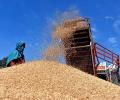
A decision to tap the 30 countries for exporting wheat was taken at a meeting of the commerce ministry on Thursday.

The Russia-Ukraine crisis, along with general bullishness in agricultural commodities, has ensured that after a fairly long time, most of the 24 commodities for which the Centre declares the minimum support price (MSP) are trading above it. The exceptions here are chana or gram and a few varieties of pulses. This might gladden the farmers, especially those who are still holding on to their stocks from the previous kharif harvest or are harvesting the latest rabi crop. But this could stoke retail and wholesale inflation.

Taking advantage of a Russian offer to sell its crude oil cheap and bear the cost of insurance and transportation, India may import as much as 2 million tonnes (mt), or roughly 15 million barrels of crude, from the sanctioned nation in 2022, Business Standard has learnt. This comes after reports that Indian Oil Corporation (IOC) bought 3 million barrels of Russian Urals from trader Vitol for May delivery. This will be on cost, insurance and freight (CIF) model, where the seller incurs the costs and pays the freight, including insurance charges.
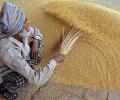
India's opening stocks of wheat in the central pool are expected to be 19.5-20 million tonnes as on April 1, 2022, the lowest in the last three years, but much higher than the normative level required for maintaining a buffer and strategic reserve, trade and market sources said. In accordance with the buffer and strategic reserve norms, India should have a wheat stock of 7.5 million tonnes in the central pool as on April 1 each year and this year's stocks, though the lowest in the last three years, will still be over 160 per cent more than what is required. On the export front, both government and trade sources are unanimous that this year (FY22) they will be 7-7.25 million tonnes, a record, while in the next financial year, they might touch even 10 million tonnes if the current momentum is maintained.

India's wheat exports could touch a new record of 10 million tonnes in 2022-23, up from a record seven million tonnes in the current financial year, if global market conditions remain choppy and no curbs are imposed on outbound shipments. That is the bullish estimate by officials from global trading firms and market watchers who say the Russia-Ukraine crisis has not only attracted global buyers to India but also pushed the price of Indian wheat from around $320 per tonne (FOB) to over $360 per tonne in less than 10 days. Food secretary Sudhanshu Pandey told reporters that wheat exports till February-end have already reached 6.6 million tonnes and by the end of March, outbound shipments will reach seven million tonnes.

The finance ministry said on Tuesday that high energy and commodity prices due to the Russian invasion of Ukraine may provide an upside risk to inflation and continued vigil is required. "Going forward, elevated energy and commodity prices may act as an upside risk to the inflation outlook in the near-medium term. "Given the inherently unsustainable nature of high prices, international commodity prices are expected to level off early with an increase in supplies outside the crisis zone," the department of economic affairs said in its latest monthly economic report for February.
India is looking to tap its diplomatic missions abroad to enable grain exporters in the country to ship out wheat and corn as supplies from Russia and Ukraine are expected to remain disrupted for some time to come. Between the two items, pushing for wheat is easier because of a huge domestic surplus. "We are hand holding our exporters and support from various Indian missions abroad is also being channelised accordingly," a senior government official said. Global wheat prices have jumped since the Ukraine crisis started, with wheat futures in the US reaching their highest levels since 2008.

In the three months leading up to the Assembly elections, Chief Minister Yogi Adityanath's government distributed over 1.4 million tonnes (MT) of wheat, 0.95 MT of rice, 0.10 MT of chana (gram), 101.9 million litres of soybean oil and 100,000 tonnes of salt as free ration. This was part of the Covid relief package, officials said.

The Centre's ambitious Rs 6-trillion National Monetisation Pipeline (NMP) could fall short of yearly targets for the current fiscal year (FY22) and the next one as well (FY23), partly due to the long gestation period in monetising big-ticket railway infrastructure, Business Standard has learnt from sources in the finance and rail ministries. Officials say the major chunk of railway monetisation will happen from FY24 onwards because leasing some of the infrastructure, like stadiums and dedicated freight corridor, will not happen anytime soon. Rail infra is expected to be the second-biggest contributor to the NMP, with about Rs 1.52 trillion worth of assets to be monetised.
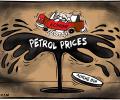
A proposal in the Union Budget 2022-23 to raise excise duty on dirtier, unblended retail petrol and diesel has met with some resistance from the petroleum ministry. However, finance ministry officials say no such communication arguing against the levy of extra duty on diesel has been received from the oil ministry. Until there are discussions between the two departments, the proposal will not be tweaked in the Finance Bill. The Rs 2 per litre additional excise duty proposed on unblended fuels in the Finance Bill will result in a uniform hike of diesel prices across the country from October 1.

Though early days, meteorologists point towards a neutral La Nina during the initial phase of the four-month monsoon season this year that starts from June. If this holds true, by the time the rains hit the mainland, it could mean there would be one less reason to worry about the prospects of the monsoon this year. Weathermen said making any accurate prediction of how El Nino will behave and what impact it can have on the progress and distribution of rains is difficult to say at this point. A clear picture will emerge around late May or early June.

At the customary post-Budget media interactions, Finance Minister Nirmala Sitharaman and her topmost bureaucrats touched upon a number of issues. The minister said the government taxing income from digital virtual assets did not give them legitimacy and that issue was being dealt separately in the planned cryptocurrency Bill. She also expressed confidence that the Budget targets were achievable.

Finance Minister Nirmala Sitharaman will present the much-awaited 2022-23 Union Budget on February 1. While there has been strong recovery in some sectors, touch services like hospitality, tourism and leisure continue to suffer after two Covid-19 waves. Household savings have been hit due to increased spending on health care. Consumption has still not reached pre-pandemic levels.

The Centre is considering a gradual phasing out of certain direct tax exemptions meant for corporate and personal tax payers. This is among the tax proposals being discussed for the upcoming Union Budget 2022-23. A top policymaker said that according to the government's internal assessment, the percentage of corporates and individuals shifting to the new exemption-less tax regime has been very encouraging, and the Budget-makers expect many more to make the switch in the coming years. The person also said the finance ministry is exploring the option of rationalising the capital gains tax rates.

These could include strengthening the public-private partnership (PPP) dispute resolution mechanism, uniform PPP institutional framework, easier terms for infrastructure companies accessing bond markets, and tax sops, Business Standard has learnt. Investment in infrastructure projects with high multiplier effect has been the Centre's main plank to revive the economy, create employment and boost consumption.

The department of investment and public asset management is racing against time to launch the LIC IPO, which could become the largest-ever listing on the Indian bourses. This would lead to some delay in the strategic divestment of IDBI Bank.

The Centre has, perhaps for the first time, decided to provide funding support to farmer-producer organisations, krishi vigyan kendras, custom hiring centres, and individuals for purchasing them.

According to highly placed sources, the finance ministry is likely to extend ECLGS and other loan guarantee schemes for micro, small and medium enterprises (MSMEs), hospitality and tourism sector, and the health infrastructure beyond March 31, Business Standard has learnt. This is likely to be announced by Finance Minister Nirmala Sitharaman as part of her Budget speech on February 1.

The government's food subsidy in the ongoing fiscal year is expected to be a little less than Rs 4 trillion.
While presenting her 2021-22 Union Budget, Finance Minister Nirmala Sitharaman had set a fiscal deficit target of 6.8 per cent of nominal gross domestic product (GDP) against the 2020-21 Revised Estimate of 9.5 per cent. The fiscal correction in the upcoming 2022-23 Union Budget is unlikely to be that steep. Even as discussions among top Budget-makers are ongoing, the fiscal deficit target for 2022-23 may likely be in the range of 6.5-6.8 per cent.
 © 2026 Rediff.com - Investor Information - Advertise with us - Disclaimer - Privacy Policy - Sitemap - Feedback - About us - Terms of use - Grievances